If you’ve been scrolling through fashion boards or saving Pinterest pins, you’ve probably asked yourself: **how much are Chanel ballet flats**? It’s a question that pops up every season, especially when the weather warms up and you start thinking about what goes on your feet. I’m not here to sell you a lifestyle—I’m here to give you the numbers, the context, and the honest take on whether these iconic shoes are worth your hard-earned cash. So let’s cut through the mystery.
New from the boutique, a pair of classic Chanel ballet flats will run you anywhere from $875 to $1,200, depending on the material and any special details. The signature two-tone beige and black cap-toe style—the one you see in every “timeless wardrobe” list—typically lands around $925. That’s before tax. And if you want a seasonal fabric like tweed or a limited-edition color? You’re looking at the higher end of that range. So yes, **how much are Chanel ballet flats** is a question with a four-figure answer. But let’s talk about what that money actually buys.

The Price Tag: What to Expect When Buying New
When you walk into a Chanel boutique or browse their website, the base price for classic ballet flats is consistent across regions in the US. The leather versions (calfskin or lambskin) start around $875. The iconic two-tone combination with the black toe cap and beige body is currently $925. Patent leather or exotic skins like python push the price up—sometimes over $1,200. Pre-COVID, prices were a hair lower (around $750), but luxury markups have been steady, and Chanel isn’t immune to inflation or brand positioning.
You can also find seasonal versions with chains, crystals, or fabric uppers (like tweed or denim) that hover in the $1,000–$1,100 range. The most expensive regular-release ballet flat I’ve seen recently was a metallic python pair at $1,475. That’s a lot of money for a shoe that doesn’t have arch support. But more on that in a minute.
Why Are They So Expensive? The Cost of Craftsmanship and Brand
Chanel doesn’t publish detailed cost breakdowns (they’re not IKEA), but here’s what industry insiders and former employees have shared. The leather is sourced from some of the best tanneries in France and Italy. Each flat is hand-stitched in a workshop—likely in Italy or France—and passes through multiple pairs of hands before it gets the CC logo. The two-tone toe cap alone requires precise alignment that machines can’t easily replicate. The shoe also has a distinctive slightly almond-shaped toe that’s designed to make your foot look elegant without pinching.
Then there’s the brand premium. Chanel doesn’t do sales or discounts (ever), and they deliberately keep production relatively low to maintain exclusivity. The result is a product that’s as much about status as it is about quality. Is the leather nicer than a $300 shoe? Yes. Is it four times nicer? That’s for you to decide.
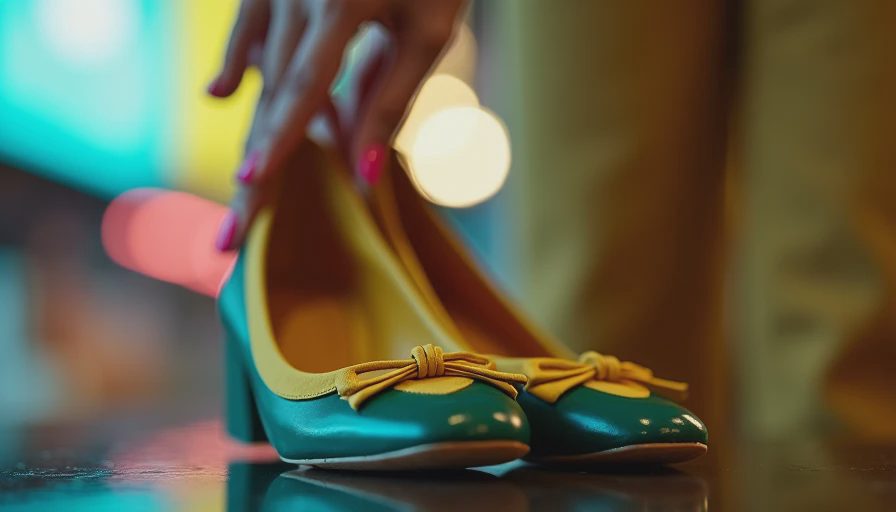
Are They Worth It? A Practical Look at Value
I’ll be real with you: if you’re looking for the most comfortable all-day walking shoe, these probably aren’t it. The sole is thin, there’s minimal cushioning, and the leather can take a few wears to break in. I’ve heard friends say they blistered for the first week. That said, once broken in, they mold to your foot and can last for years—especially if you rotate them and replace the sole protector periodically.
From a cost-per-wear perspective, if you wear them twice a week for three seasons (spring, summer, fall) and keep them for five years, that’s about 150 wears. At $925, that’s just over $6 per wear. Compare that to a $100 pair of fast-fashion ballet flats that last one season (maybe 30 wears)—that’s $3.33 per wear. So the Chanel isn’t as insane as it first appears, but only if you actually wear them regularly.
But here’s the thing: I don’t think they’re for everyone. The person who buys Chanel ballet flats should genuinely love the design and be willing to treat them as an investment piece. If you’re just chasing the logo or the Instagram aesthetic, you might be disappointed by the lack of comfort and the fact that they scuff easily. The soles are leather, so walking on damp pavement is risky. You’ll want to add a rubber sole protector from your cobbler (around $30–$50) before you even wear them outside.
Cheaper Alternatives That Look and Feel Great
If the price tag makes you wince (same), don’t worry—there are plenty of alternatives that capture the same silhouette without the boutique anxiety. Repetto is the obvious one: they make the original ballet flats that Chanel supposedly took inspiration from. Their classic leather flats are around $400–$500 and are handcrafted in France. They’re arguably more comfortable from the get-go and come in a rainbow of colors.
Other solid options:
- **Tieks** – Around $375. Known for being packable and having a slightly sportier sole. Good for commuters.
- **Everlane The Italian Leather Day Flat** – $165. Clean, minimalist, and surprisingly well-made for the price.
- **Madewell The Frances Ballet Flat** – $98 (often on sale for $60). Great budget option, especially if you’re not sure the style suits you.
- **Loeffler Randall** – Around $350. Their ballet flats have a slightly padded insole and come in fun colors and patterns.
If you’re determined to get the real thing but want to save, consider pre-owned. Sites like The RealReal, Vestiaire Collective, and eBay have Chanel ballet flats in good condition for $500–$700. Look for listings with clear photos of the soles and logos. Authenticate carefully—there are a lot of fakes floating around.
Final Thoughts: Should You Buy Chanel Ballet Flats?
Let’s recap: **how much are Chanel ballet flats**? New, expect to spend $875–$1,200. Pre-owned, $500–$800. They’re expensive, they’re not the most comfortable out of the box, and they require maintenance. But if you love the design, have the budget, and want a shoe that can last a decade with proper care, they can be a good buy.
Personally? I’d go for a pair of Repottos or Everlanes. My feet don’t need to be wrapped in a logo—they just need to get me from the Blue Line to my desk without complaints. But hey, if you’ve got the money and the heart wants what it wants, I’m not going to talk you out of it. Just don’t expect them to be your daily commute hero.
*Comfort is not a compromise. It’s an attitude.*


Travellers Write
No letters yet — be the first traveller to write.